

Many years ago I came across one of the most transformative books I had ever read and I have referred to various parts of it many times over the years both personally and professionally. That piece of writing was Man’s Search for Meaning by Victor E. Frankl. If you are developing a reading list for 2026 I strongly encourage you to put this classic on the top of your list.
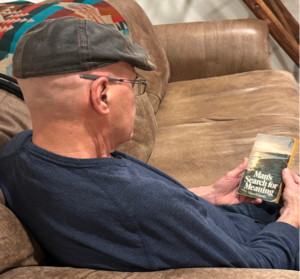 Frankl was a practicing psychiatrist in 1942 when he and his family were rounded up and placed in a Nazi concentration camp. During his lengthy incarceration he took meticulous notes as to what he experienced and witnessed as his fellow prisoners attempted to stay alive. He believed that the primary deciding factor in survival was whether the prisoners could find meaning beyond their suffering, meaning which often, but not always, came from faith in God.
One of the most powerful observations he writes about is summarized in this brief statement:
“We who lived in concentration camps, can remember the men who walked through the huts, comforting others, giving away their last piece of bread. They may have been few in number, but they offer sufficient proof that everything can be taken from a man, but one thing: the last of the human freedoms, to choose one’s attitude in any given set of circumstances, to choose one’s own way.”
Over fifty years after I first read of it, those prisoners’ refusal to allow themselves to be hardened or defeated by their circumstances still lives in my memory and inspires me to this day. I was reminded of it yet again just a couple of weeks ago when I was talking to a friend who is providing some of the personal care for his 93-year-old father. His father has just recently begun losing control of his bowels and my friend is needing to clean him up on a regular basis. While my friend admitted that particular task was “nothing [he] looked forward to” (!), he was choosing to see having this intimate time caring for his father as “a blessing and a gift.” What an incredible perspective!
Once again, I was reminded that there are no circumstances in which we do not have the freedom to choose our own response, and I recommitted to exercising that freedom in my own life. If you have been following this blog, you know I have repeatedly written about my escalating concern for the growing division within this most amazing country of ours (and will undoubtedly write about it again!). These are challenging times for a wide variety of reasons and many of us—myself included—often feel fearful of what we see happening around us, but powerless to do anything to change the massive forces that are beyond any single individual’s ability to control.
When I find myself feeling like this, overwhelmed by circumstances I can’t change, my go-to strategy is to listen for what my Sneaky God—what others may consider intuition and Viktor Frankl termed the “unconscious God”—may be trying to tell me. And usually, if I listen closely enough, I can catch a soft whisper. Whether it’s an invitation to step into a conflicted situation to try to establish common dialogue, a nudge to avoid automatically aligning with either party to keep from “pre-judging” candidates or issues, or a call to offer comfort or assistance to those amongst us being abused, marginalized or alienated, a way seems to appear where there was not one before. When I choose to follow that quiet guidance, it may or may not change the situation but never fails to change my attitude.
As we begin yet another new year, I feel strongly that Frankl presents us with an amazing gift and challenge, no matter what “given set of circumstances” we face. When I feel powerless or hopeless, I try to remember those courageous prisoners who “walked through the huts comforting others, giving away their last piece of bread” and realize there is always something we can do, especially if we lean on our faith to figure out just what that might be.
QUESTIONS FOR DEEPENING THE JOURNEY
- Reflect on the story about the concentration camp prisoners giving away the last of their bread. What do you think the impact of that act on those who received it was? How about those who witnessed it? What effect does it have on you?
- Are there any people who have inspired you by their ability to transcend their situation? What do you think gave them that strength?
- What is a circumstance you currently face that generates feelings of fear, anger, hopelessness, despair, or any other overwhelming negative emotion? Do you believe you are powerless to change your attitude? Why or why not? What do you think would it take to turn your attitude around?
- What is the connection between attitude and behavior? Does attitude create behavior or vice versa?
- Can you recall a time when shifting your attitude seemed to shift the situation itself, without any other change on your part?
- Do you intentionally listen for whispers from our Sneaky God (intuition, Higher Self, etc) and are you able to hear them when you do? When you feel a nudge, do you follow through? If so, how does that generally go? If not, why not?
ACTION CHALLENGE: Pick a difficult situation in your life (it can be the same as #2 but doesn’t have to be) and make a commitment to improving your attitude. Try reframing the situation as an opportunity for learning and growth, and reflect on any piece of it that you can genuinely feel gratitude for. Set aside some time to listen for “whispers” and come up with 1-3 actionable steps to loosen the hold it has on you. Can you see a difference after completing this experiment?
Dear Terry and Rita: After 61 years of ministry, I can verify that the most treasured and valued times were those where I felt our Blessed Lord was guiding in the walk of helping others. Oh, there was a lot of junk I had to deal with but our Lord seemed especially close when I was invested in helping others often in very difficult times. Thanks for this input which affirms the Gospel message of LOVE for others.
Thanks, Terry. Lots to ponder here.
Terry, I think this phrase I often use with others parallels what you wrote in this blog about creating a certain attitude. . . “I have no control in the world over what another person thinks, says or does–or doesn’t think, say or do. However, I have all the control in the world over how I react to what another person thinks, says or does–or doesn’t think, say or do.” I offer that to others. I should heed it more myself.
As always, thought provoking on so many levels. 1st my daughter (Sammy!) just leant me a copy of Man’s Search for Meaning on New Years day so now the fire has been lit to actually start reading it so thank you for that. 2nd, and the hardest part, for me, is….yes I agree there are no circumstances in which we do not have the freedom to choose our own response but still working aggressively to hold back on my initial response. To try to calm down, and listen, really listen to the still, inner voice. Then offer what I hope… Read more »