
When Rita and I stopped for breakfast at our favorite little café, I noticed a gentleman around my age at a table near the door. More specifically, I noticed what was on his head.

Frank in his $30,000 hat
Rita, in the way that couples who have been married as long as we have, was thinking the same thing I was. “It’s your kind of hat” she said.
It was the kind of flat hat I wear most of my waking hours now that I have lost the curly locks I had in my younger years. In fact, if you look under bio on my website you will see my old “go-to” hat!
I approached the gentleman and complimented him on his hat.
“This hat cost me $30,000,” he told me.
I eyed him skeptically. It was a nice hat, but it wasn’t that nice!
Laughing, he explained that the hat wasn’t available for retail, you had to buy a Harley Davidson bike in order to get one. Then, without a moment’s hesitation, he added, “I actually have another one at home and I’ll see that you get it. The next time you come in it will be behind the counter with your name in it.” All of this happened within about three minutes.
The man—who I learned was named Frank—gave away his hat to a complete stranger without a thought to the cost of the hat or if he might lose his and need another one someday. All he heard was, “I really like your hat” and he immediately responded, “ I have an extra, I’ll see that you get it.” Not only that, but he followed through!
The next time I went to the café, sure enough, there was a hat with my name in it waiting for me. Now I had a $30,000 hat of my own!
But far greater in value than the hat itself, was the privilege of witnessing Frank’s spur-of-the-moment generosity. It is something so unique, so special that I felt it needed its own term. I coined it “spontaneous sharing.”
I had another experience with spontaneous sharing more recently.
Rita has a good friend named Callie, who is a delightful, easy-going woman. A concert pianist, she rises early every morning to play her beloved grand piano, which now sets in the center of her living room.
During a recent phone conversation she and Rita were discussing how they remain sane during this difficult time. Callie said it was her flower garden and her piano, and Rita mentioned that she played the piano years ago and really loved it. Rita explained that she has been playing on a small electronic keyboard with thirty six keys.

Rita playing her keyboard
Without a pause Callie said, “I have a high quality full keyboard electronic Yamaha, complete with custom table and bench that I seldom use and would love to give to you!”
Rita was completely caught off guard and for a few moments speechless! Rita finally said, “I would certainly be interested but I would want to pay you.”
Callie would have none of it. She didn’t want to be deprived of the joy of giving. “it will be a complete gift to you,” she insisted. “The only thing I want is an in-home concert when this whole virus clears up.” She truly seemed as thrilled to give it as Rita was to receive it.
I was sharing this experience with a friend who said, “It’s easy to give things away when you are well off.” But wealth really has nothing to do with it. Actually Callie is not well off at all and could probably have used the extra money the keyboard might have fetched.
To be honest, in my personal experience with spontaneous sharing, I haven’t found any direct relationship between how much one has and their likelihood of being a “spontaneous sharer”—and if there is one at all, it runs in the other direction. Many folks who have a fortune find it difficult to part with any of it while others who have far less seem to find great joy and peace in giving out of their scarcity!
I am reminded of a visit I made to a congregation on a Sunday in order to meet with their leadership when a group returning from a mission trip in rural Appalachia gave a presentation to the congregation.
The mission group had been connected with Lily, an elderly black woman whose husband died a few years earlier was living alone in the home. Lily’s roof was in disrepair and she had been placing plastic over her bed to keep it from getting wet when it rained.
Over the five days they were there, the group were able to install a new roof and fix the inside flooring which had sustained water damage over the years. On the last day, while the group was finishing up, Lily suddenly made an announcement.
Before you leave,” she said, “I’m going to cook y’all good folks a thank-you meal.”
Although they assured her there was no need and her obvious delight was more than thanks enough, she would not be deterred. So, with a little help from the volunteers, Lily cooked up a “southern feast” that I am sure many of those folks are still talking about today.
One of the young college women who helped Lily with the meal described the experience. All of the vegetables came directly from Lilly’s garden except for the sweet potatoes which she gathered from her cold cellar. And Lily basically emptied her old freezer when she got out the chicken for the meal.
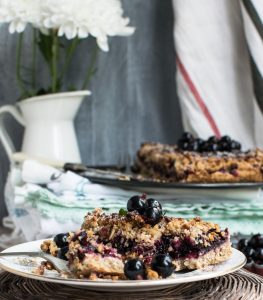
Photo by Monika Grabkow on Unsplash.com
For dessert Lily baked a blueberry cobbler and when she pulled it from the oven she cut a large piece, wrapped it up, and set it outside. She explained, “That’s for Willy, the next-door neighbor boy who picked the blueberries for me. I promised him the first piece and any leftovers. My husband chose Willy to share his secret blueberry patch with!”
After the enormous—and delicious—meal, the young woman admitted she was worried that Lily’s food stock was so depleted. “I asked her where she was going to get more food for herself. Lily replied, ‘It will show up just the same as you all did! It seldom comes the way or at the time I expect or want it to but the good Lord has always come through for us one way or the other.’”
Unlike most of us, Lily obviously didn’t look to material things for her sense of security. She had something far greater and more reliable to depend upon. Witnessing Lily’s remarkable faith was utterly transformational for that young woman and the entire mission group. Lily may have received a new roof for her house, but those folks left with a more substantial foundation for their lives!
I am awed and humbled by people like Frank, Callie, and Lily. While I certainly give things away and make charitable donations like most of us, what I’m calling spontaneous sharing is a whole different thing. It is more than just generosity. It suggests an entirely different relationship to “stuff” altogether. Frank, Callie, and Lily all hold their possessions with a lightness and ease that makes it clear they aren’t “owned” by their things in the way so many of us—myself included—often are.
I know I am attached to money and things more than I would like. Of course, a certain level of wealth is necessary to meet your needs, but there is a huge difference between what we want and what we actually need, and above that, wanting more money and possessions is generally about things like self-worth or feelings of security, things that might better be found elsewhere.
Undoing decades of cultural conditioning about the importance of wealth is a tough challenge and one I’m still working on myself. How can I to get to that place of freedom from “stuff” that spontaneous sharers seem to operate from? I wonder if spontaneous giving itself holds the answer. When I’ve put it into practice, I’ve been amazed at how freeing it is. Perhaps making it a habit could help rewire the old pathways I’ve had such trouble changing. If so, spontaneous giving might not be just an outcome of the attitude I’m striving for, but a path towards it as well.
Questions for Deepening the Journey
- Have you ever been blessed with a habitual spontaneous sharer in your life or even had a one-time experience with it? If so, what feelings, thoughts, or desires did this stir up in you?
- Have you ever been a spontaneous sharer yourself? What was that experience like for you and what reactions did it evoke in the recipient and/or others?
- What do you believe the ability to share spontaneously says about the givers’ relationship with material things? How do you think their relationship with their money and possessions differs from most people’s?
- How much of your identity and security is tied to what you own? Are you comfortable with this? Why or why not?
- Can you imagine with me, for a few moments, what our world would be like if we became a culture of spontaneous sharing or at least held it as an ideal?
- If you have never been this spontaneous sharer, what do you think is holding you back?
- Are you willing to watch for the opportunity and risk giving spontaneous sharing a try? WARNING!!!! WARNING!!! This action has the same potential as the coronavirus to be contagious!
Banner photo by Lina Trochez on Unsplash.com